Three Days to a Demo: WhiteboardQ, Kenshi Creative Mode, and the Game I've Wanted to Make
I was “in-bed” sick for two days last week. Still managed to ship a WhiteboardQ demo in three days. Sometimes the flu clears your head.
WhiteboardQ
A college buddy of mine does IT consulting for dental practices in the Triangle. He called with a problem: his clients needed a way to display patient status on screens throughout the office. Who’s waiting, who’s in which room, who’s ready for the dentist. And a timer, with yellow and red alerts when patients have been waiting in the chair for too long. Old-school whiteboards weren’t cutting it anymore, and everything on the market was either overpriced, over-complicated, or required subscriptions nobody wanted to manage.
I said I’d take a look.
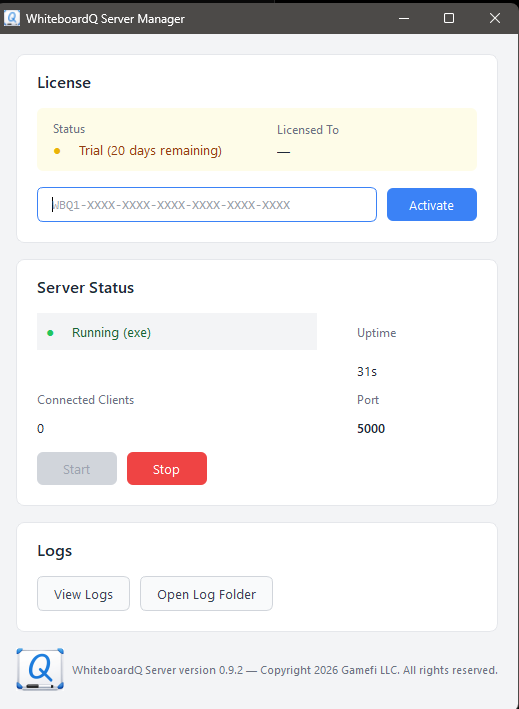
Three days later, WhiteboardQ was demo-live. Client/server architecture, real-time WebSocket updates, designed for HIPAA-aligned workflows (No-PHI messaging, local network deployment, access control, audit logs), station-based displays for different areas of the practice. The server runs on their local network. The client displays run on whatever hardware they’ve got, existing clinical laptops, front desk PCs, even old tablets.
WhiteboardQ 3-minute demo
This was real client work, run through my full development system: Basecamp project with billable hours tracked, status updates, issue tracker kanban, client chat and download areas. Master spec plus specs for every subsystem. End user documentation built as part of the workflow, not bolted on after.
- Day 1: spec → working build + installers
- Day 2: licensing + verification + demo shipped
- Day 3: domain + landing page live
Hot damn we can move so fast now! AI is gas. Process is the steering wheel!
Over the next couple of weeks, will be fleshing out this B2C concept (hardening the license server, installers, and documentation) and working out channel partner terms so we can start pushing this to local clients. Turns out there’s a market for “simple, local, works” when everything else wants to be cloud-hosted SaaS with monthly fees.
Kenshi Creative Mode
Needed a palate cleanser between client work. I’ve been playing Kenshi for years. I’d been working on Skeleton Forge, my AI-first modding toolkit, and wanted to push it further.
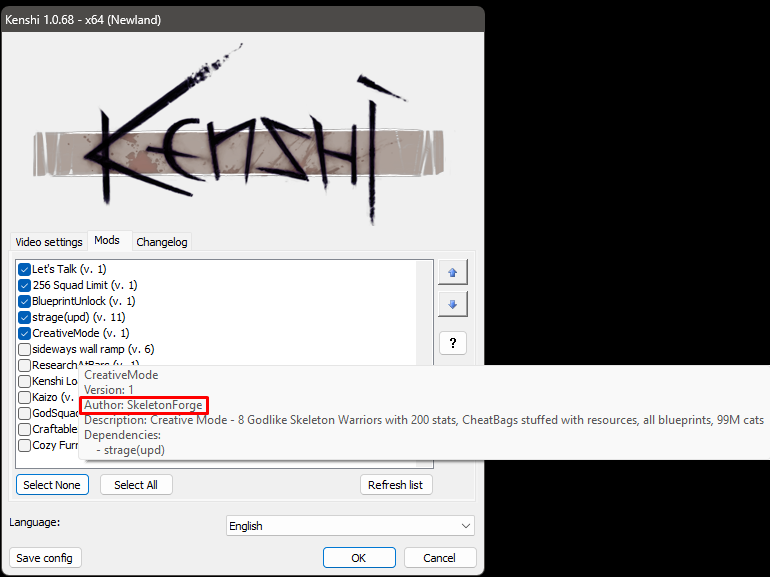
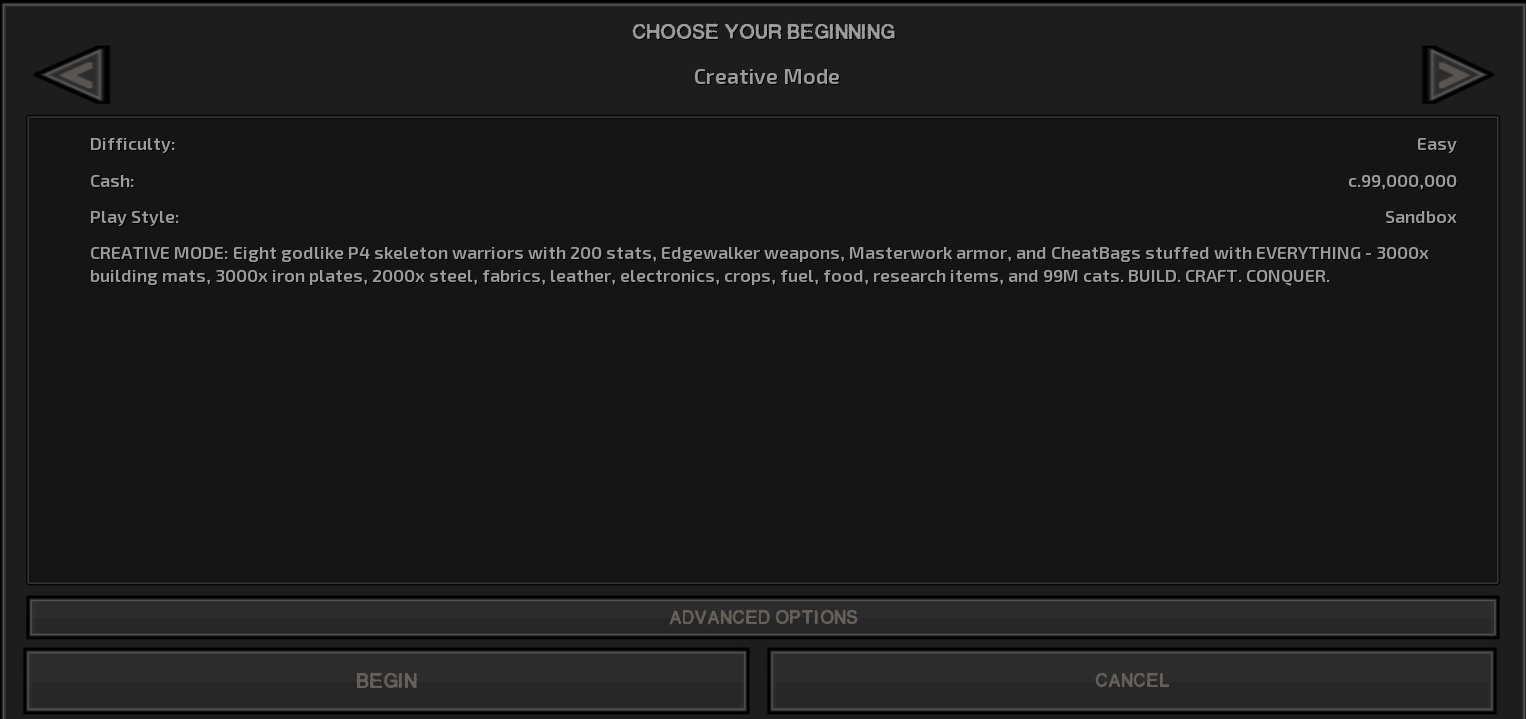
The result: Finally, Kenshi now has something I’ve always wanted. A “Creative Mode” mod (well, kinda). Eight characters, each starting with a backpack containing 9999 units of 29 different crafting materials. 100% weight reduction and 0 combat penalties. Every building material, every component, every raw resource needed to build anything in the game. About 2.3 million total items. All research unlocked. So it really does feel like Creative Mode since you are so tough nothing can really hurt you, all the building and research (engineering, farming, weapon/armor making, robotics) research recipes are unlocked, and all building recipes are available. And you have all the stuff to build entire cities!
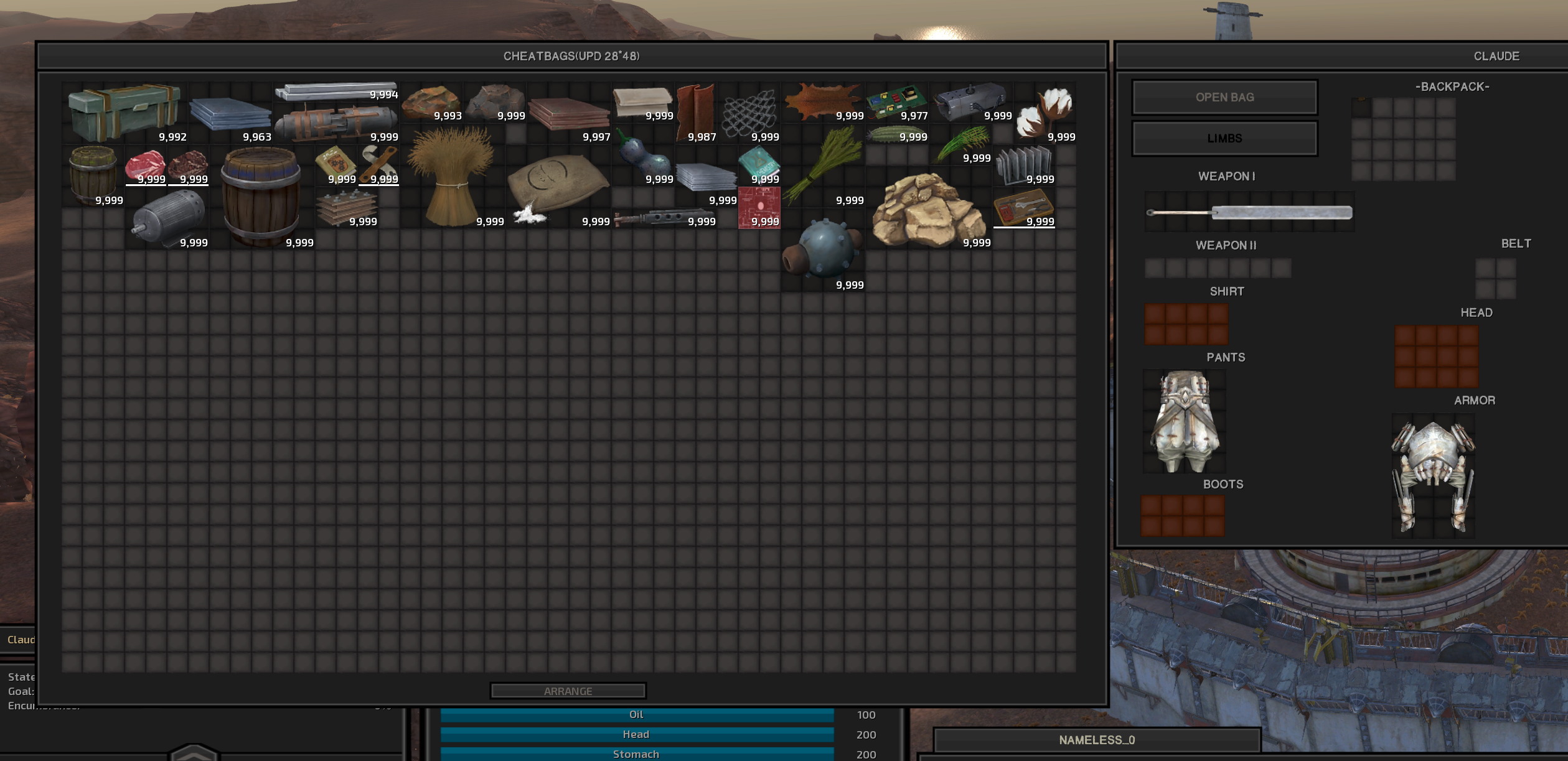
The technical challenge was interesting. Kenshi’s modding system wasn’t designed for this. You can’t just inject items into save files. But you can create custom game starts that spawn characters with fully-loaded inventories. Reverse-engineered the “Wandering Trader” start to understand how items get distributed into containers, then built the creative mode on top of that foundation.
I couldn’t find an existing mod like this out there. Basically full creative mode, no grinding, just build whatever you want wherever you want. I took my god squad to The Pits East, a region I’d never even visited in hundreds of hours of play. And started building on a cliff overlooking the ocean…
Sometimes you need to remember why you got into this in the first place.
Last Light
Speaking of why I got into this.
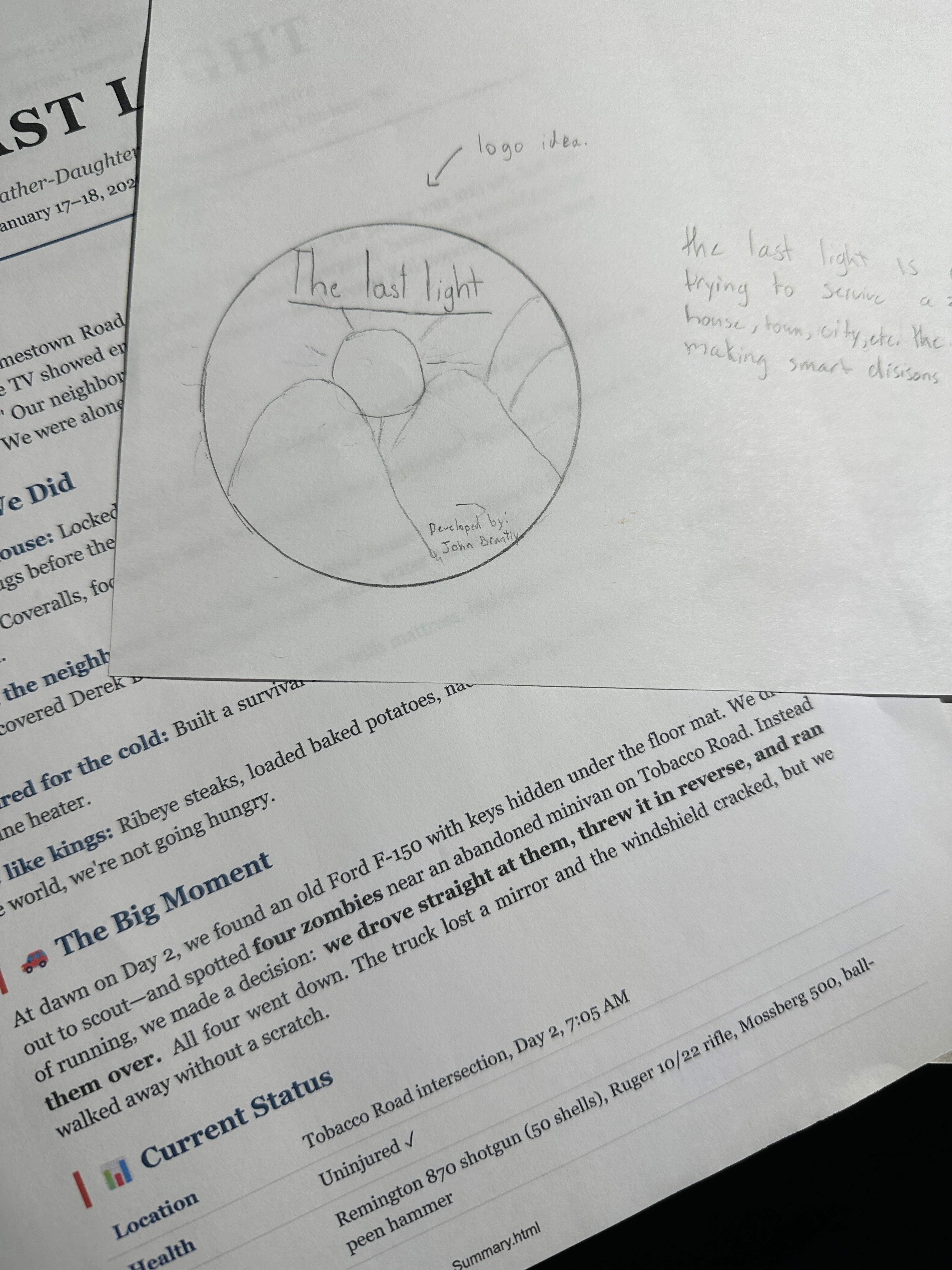
Summary of my first game session with my daughter- Next day I woke up to a note from her with some marketing input !
I’ve had an idea for a game rattling around in my head for years. Not the combat-focused post-apocalyptic survival everyone makes. Something quieter. You know that feeling in zombie fiction when the protagonist finds an abandoned house and goes through the drawers? Finds a really nice Japanese knife in someone’s kitchen, or caviar in the pantry? That moment of discovery, of archaeology through someone else’s life?
That’s the game: a cozy apocalypse, but hyper-real. You give it an address (your own home is the best place to start, because you already know every street and shortcut), and it builds the world from reality: maps, neighborhoods, housing, shops, churches… the local texture that makes a place feel true. The default is quiet: you’re alone, exploring suburban and urban spaces that used to belong to people. You scavenge, you build a home base, you survive, without forcing it into survival horror.
If you want threats, you slide the difficulty up. No hordes by default, but the world can get mean if you ask it to.
The trick is: the world is real, but the people aren’t. For privacy, no real residents are used. Every character and backstory is generated. Believable, local, and anonymous. And layered over all of it is an AI “dungeon master” that turns your run into a coherent, location-flavored story. When you’re done, the game exports your run as a short story, someday even a draft for a novel.
Phase 1: real-world map + scavenging loop Phase 2: AI DM + emergent narrative Phase 3: story export
I’m calling it Last Light.
It’s early. Very early. Still mostly a dream really, but I’m starting to build out proof of concept subsystems. I’ve been thinking about it long enough that the pieces are starting to fit together. The hard problem is making scavenging feel meaningful when players know items are procedurally generated. I have some ideas about crowdsourced content and real-world item databases that might help with this.
More as it develops. This one’s personal.